

Top Areas to Rent a House in Karachi 2026 – Affordable to Luxury
Introduction
Looking to rent a house in Karachi but not sure where to even begin? That confusion is completely normal — and more common than people admit. Two streets apart in the same neighborhood can mean a difference of Rs. 15,000 or more in monthly rent, and no agent is going to volunteer that information upfront. If you’re relocating from another city, returning from abroad, or simply upgrading your living situation, the sheer size of Karachi makes the whole process feel overwhelming before it even begins.
Karachi is not just Pakistan’s largest city — it’s the country’s economic engine. Where you choose to rent here directly affects your commute time, your children’s schooling options, your sense of security, and how far your salary stretches every month. With inflation putting pressure on household budgets across Pakistan, making the right rental decision in 2026 matters more than it did even two or three years ago. A wrong area choice doesn’t just cost money — it costs time, safety, and daily quality of life.
The good news is that Karachi has genuinely strong options across every budget. Whether you’re a young professional looking for something under Rs. 40,000 a month, a family of four needing space in a mid-range area, or someone relocating on a corporate package — this city has it. Knowing which Karachi areas offer the best value for your specific needs before you start visiting properties will save you weeks of wasted effort and real frustration.
This guide breaks down the top areas where you can find a house for rent in Karachi in 2026 — from genuinely affordable neighborhoods to premium addresses — so you can make a decision based on real ground-level information, not just a Google Maps search.
What People Searching for a House for Rent in Karachi Are Actually Facing Right Now
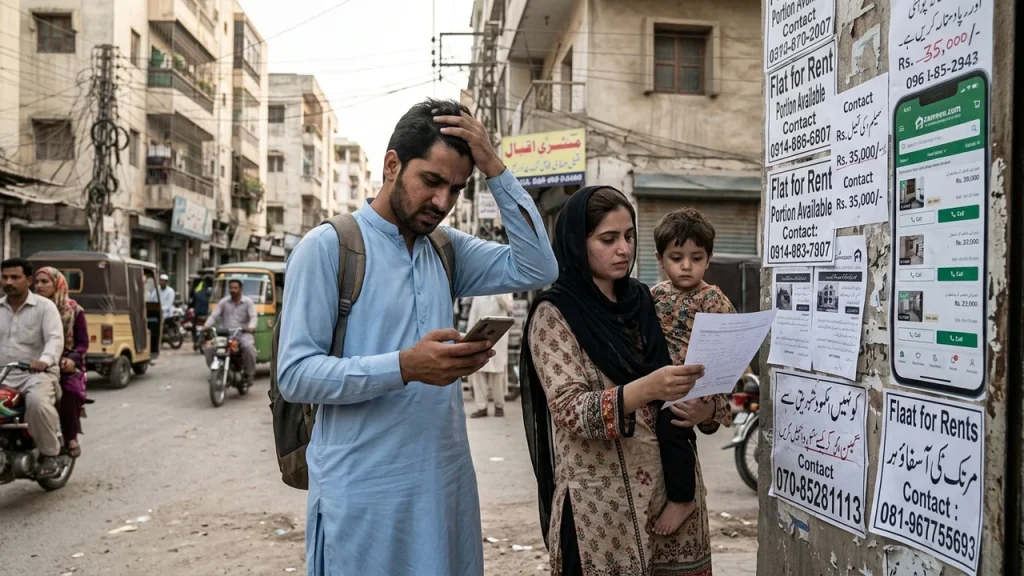
Karachi’s rental market in 2026 is not the same animal it was in 2022 or even 2023. Several forces have reshaped how the market works, what landlords expect, and what tenants can realistically afford.
Rising Rents Across the Board. Cost trends tracked by the State Bank of Pakistan reflect sustained upward pressure on urban housing costs across major Pakistani cities, and Karachi has felt this sharply. In many mid-tier areas like Gulshan-e-Iqbal and North Nazimabad, rents have climbed noticeably over the past 18 to 24 months. A house that rented for Rs. 55,000 in 2023 is frequently listed at Rs. 70,000 to Rs. 80,000 today. Tenants on fixed salaries are feeling this the most.
Return of Overseas Pakistanis and Corporates. There has been a visible uptick in demand from overseas Pakistanis returning or investing, particularly in DHA and Clifton. This has pushed premium area rents higher while also increasing competition for well-maintained properties. Landlords in these areas now have more leverage than they did a few years ago.
Sindh Building Control Authority Oversight. The Sindh Building Control Authority (SBCA) continues to regulate construction and residential approvals across Karachi. Areas with SBCA-approved housing schemes tend to offer better long-term security for tenants in terms of structural legality and utility connections — something worth checking before you sign anything.
I’ve spoken to enough renters in this city to know that most of them find their house through word of mouth or a local dealer, not through official listings. That’s still the reality in 2026. Your best information usually comes from someone who already lives in the area you’re targeting.
Best Areas to Find a House for Rent in Karachi 2026 – Full Breakdown
1. DHA Karachi – Premium House for Rent in Karachi’s Most Planned Community
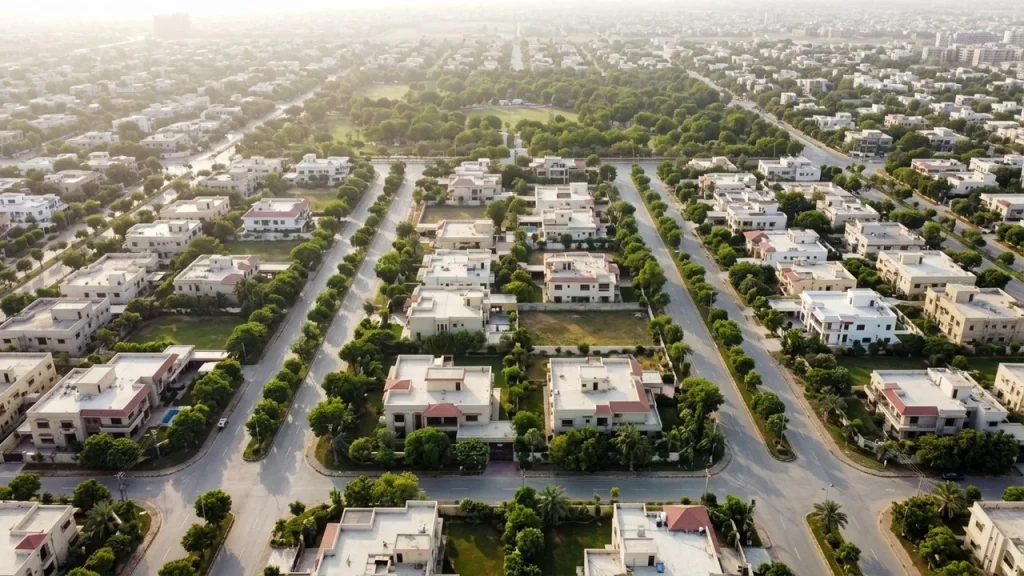
DHA Karachi remains the gold standard for rental housing in the city. It’s well-planned, relatively secure, and has the kind of infrastructure — wide roads, consistent utilities, commercial zones — that most other areas in Karachi simply don’t match.
Rent here reflects that quality. A 3-bedroom house in DHA Phase 6 or Phase 8 typically starts around Rs. 120,000 per month and can go well above Rs. 250,000 for larger bungalows with servant quarters. Phase 2 and Phase 4 offer slightly older stock but are often more affordable within DHA’s own range, sometimes starting at Rs. 85,000 for a decent 3-bed.
DHA is managed by the Defence Housing Authority, which maintains its own standards for construction, roads, and commercial activity. This gives tenants a level of accountability that is genuinely rare in Karachi’s broader rental market.
Important: Always verify that the property’s ownership documents are in order through DHA’s official records office before paying any advance. Fake listings exist even in premium areas.
The tenant profile here skews toward corporate executives, returning overseas Pakistanis, and senior government officials. If your budget allows it and you value security and infrastructure above all else, DHA is hard to argue against.
2. Clifton – Central Luxury Living for Those Renting a House in Karachi
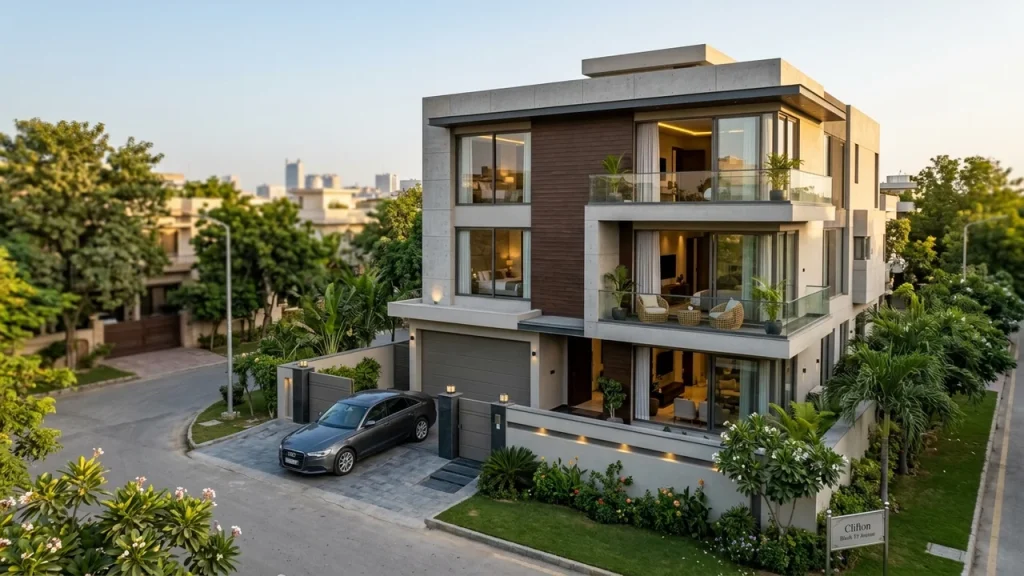
Clifton is where old money and new money meet. It sits close to the sea, close to the city’s major commercial zones, and offers a mix of older large bungalows and newer properties that appeal to a wide range of renters.
Rents in Clifton Blocks 2 through 9 vary considerably depending on the block and property type. A standalone house in Clifton Block 4 or Block 8 typically rents between Rs. 100,000 and Rs. 200,000 per month. The area is dense and lacks the open-road feel of DHA, but its location more than compensates for many tenants.
What Clifton offers that DHA does not is proximity. You’re 10 minutes from Sea View, 15 minutes from most central business districts, and surrounded by good schools, hospitals, and restaurants. For families where both parents work in the city center, that daily time saving adds up fast.
Honestly, Clifton properties that are well-maintained get snapped up quickly. If you find a good one, don’t wait three days to decide — the landlord won’t wait either.
3. Gulshan-e-Iqbal – Best Mid-Range House for Rent in Karachi
If DHA and Clifton are beyond your budget but you don’t want to compromise on connectivity and basic amenities, Gulshan-e-Iqbal is where most middle-class Karachi families end up — and for good reason.
Gulshan is one of the most well-connected areas in the entire city. It sits near University Road, gives you access to multiple bus and transport routes, and has schools, hospitals, and markets within practical distance of almost any block within it. Blocks 1 through 7 tend to be the most sought after, with Blocks 13 and 14 offering more space at slightly lower rents.
Rent for a 3-bedroom house in Gulshan-e-Iqbal currently ranges from Rs. 45,000 to Rs. 80,000 per month depending on the block, condition of the property, and whether it includes a garage or servant quarter. You can still find decent 2-bedroom options in the Rs. 30,000 to Rs. 40,000 range if you’re willing to look a bit harder.
A lot of first-time renters in Karachi land in Gulshan and realize it was the right call. The area has a lived-in, functional energy that more polished areas sometimes lack.
4. North Nazimabad – Spacious, Affordable, and Underrated
North Nazimabad does not get the credit it deserves in most rental conversations about Karachi. It is a large, organized residential area with wide streets, a strong community feel, and significantly more space per rupee than comparable mid-tier areas.
The blocks in North Nazimabad — particularly Blocks A, F, H, and K — offer large plots, older but well-maintained houses, and a family-friendly environment. Many Karachi families who prioritize space and a quiet neighborhood over premium location choose North Nazimabad over more hyped-up areas. Rent for a 3-bedroom house here typically falls between Rs. 35,000 and Rs. 60,000 per month.
One thing worth knowing: North Nazimabad has strong connectivity to the Northern Bypass and several commercial zones, making commutes manageable even if your office is in a different part of the city. Water supply can be inconsistent in some blocks though — always ask about the water situation before finalizing any property. This is something experienced renters know but rarely mention to newcomers.
5. Gulistan-e-Johar – Young Professionals’ Top Pick for Karachi House Rentals
Gulistan-e-Johar has grown rapidly over the past decade and has become one of the most popular areas for young professionals, small families, and couples setting up their first independent household. The area has real energy — there are food streets, shopping options, and a social atmosphere that older residential areas don’t quite replicate.
Rent here is comparable to Gulshan-e-Iqbal in some blocks, with 3-bedroom houses typically ranging from Rs. 40,000 to Rs. 70,000 per month. Blocks 3, 7, 13, and 18 are generally considered the most in-demand. The proximity to Jinnah International Airport is also a genuine plus for frequent travelers.
The area has seen considerable construction activity, and some of the newer builds are in good structural shape. Older properties need more due diligence — check for water tanker dependency and any pending utility issues before signing a lease.
6. Scheme 33 – Most Affordable Option for a House for Rent in Karachi
If budget is the primary driver and you need a reasonably sized house in a functional neighborhood, Scheme 33 deserves serious attention. It sits in the eastern part of Karachi, covers a large area, and offers some of the most affordable rental prices for standalone houses anywhere in the city.
Rent in Scheme 33 for a 3-bedroom house can start as low as Rs. 22,000 to Rs. 30,000 per month in several sectors — making it one of the few places in Karachi where a lower-middle-income family can rent a proper house rather than cramming into an apartment. The area is still developing in parts, which means infrastructure varies considerably from sector to sector.
Important: Connectivity from Scheme 33 to central Karachi can be challenging during peak hours. Factor commute time into your decision carefully — especially if you work in areas like Saddar, Clifton, or DHA.
Recent infrastructure trends suggest the area is being progressively developed, and property values here have been slowly rising. Getting in now while rents are still relatively low is a decision several families I know have not regretted.
7. PECHS and Bahadurabad – Central, Established Karachi Rental Neighborhoods
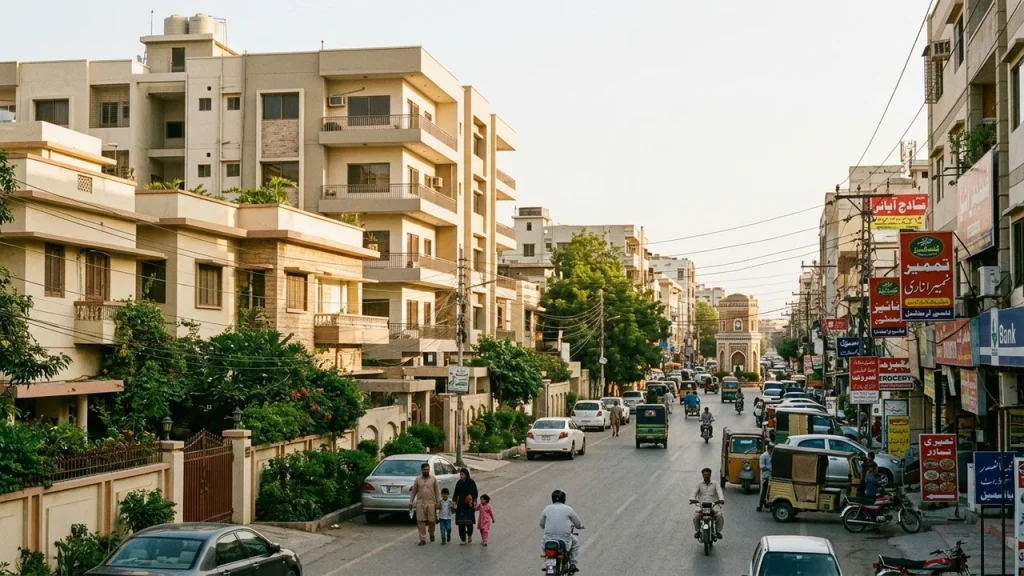
PECHS (Pakistan Employees Cooperative Housing Society) and the adjoining Bahadurabad neighborhood represent some of the most centrally located rental options in Karachi. These are established, mature neighborhoods with good road networks, solid commercial activity, and strong community infrastructure.
Rent in PECHS for a house ranges quite widely — from Rs. 60,000 for a modest 3-bedroom to Rs. 130,000 or more for a well-maintained larger property. Bahadurabad tends to be slightly more affordable than PECHS proper, with reasonable 3-bedroom options around Rs. 45,000 to Rs. 65,000 in several lanes.
What makes PECHS particularly appealing is its central position. From here, you can reach Saddar, Clifton, Gulshan, and the main commercial arteries of the city without spending more than 20 to 30 minutes on the road in most conditions. For families managing multiple school runs and office commutes daily, that geographic flexibility is genuinely valuable.
Most dealers in this area won’t openly tell you that properties on main roads carry a noise and dust premium — a house two lanes inside will give you more quiet and often the same location advantage for less money.
8. Nazimabad – Budget House Rentals in Karachi With a Community Feel
Nazimabad is one of Karachi’s oldest planned residential areas and still holds genuine appeal for families looking for affordable housing in a connected, established neighborhood. It is particularly popular among families with deep Karachi roots who prefer staying in a community they know well.
Rental prices in Nazimabad are among the more accessible in the city’s older residential zones. A 3-bedroom house here typically rents between Rs. 28,000 and Rs. 50,000 per month depending on the block and condition. Blocks 3, 5, and 10 are consistently well-regarded within the area.
The area has older infrastructure in parts, and water supply can be a recurring issue in certain blocks — a pattern that shows up in several older Karachi neighborhoods. That said, the sense of community here is real. Neighbors tend to know each other, which matters for families with young children or elderly members.
Karachi Rental Areas at a Glance – Quick Comparison
Here is a practical summary of what each area offers:
- DHA: Rs. 85,000 – Rs. 250,000+ | Best for: Security, infrastructure, premium living
- Clifton: Rs. 100,000 – Rs. 200,000 | Best for: Central location, established prestige
- PECHS / Bahadurabad: Rs. 45,000 – Rs. 130,000 | Best for: Central access, mature neighborhood
- Gulshan-e-Iqbal: Rs. 30,000 – Rs. 80,000 | Best for: Connectivity, mid-range families
- Gulistan-e-Johar: Rs. 40,000 – Rs. 70,000 | Best for: Young professionals, modern vibe
- North Nazimabad: Rs. 35,000 – Rs. 60,000 | Best for: Space, quiet, family environment
- Nazimabad: Rs. 28,000 – Rs. 50,000 | Best for: Budget, community, established area
- Scheme 33: Rs. 22,000 – Rs. 40,000 | Best for: Lowest rent, standalone houses
What to Check Before Renting Any House in Karachi
Knowing what documents to verify before signing a rental agreement in Pakistan can save you from problems that take months to untangle. Here are the practical checks that matter most:
Ownership documents. Ask to see the original title deed or allotment letter. In Karachi especially, sub-letting without the owner’s knowledge is more common than people realize. You want to confirm you are dealing with the actual owner or a properly authorized agent.
WAPDA and KWSB status. Check whether the property has a clean WAPDA meter in the owner’s name and whether it is connected to KWSB (Karachi Water and Sewerage Board) supply or is dependent on a water tanker. Tanker dependency adds Rs. 3,000 to Rs. 8,000 to your monthly costs and is inconsistent.
Society or authority approval. In DHA, verify the allotment through DHA’s records. In SBCA-regulated areas, check that the construction is approved and there are no pending violation notices. Renting in an unapproved structure carries real risk if any legal action is initiated.
Verbal promises in writing. If a landlord says he will repair the roof before you move in, get it in the agreement. Verbal commitments in Karachi rentals evaporate faster than you would expect. I’ve seen this exact situation cause disputes in Gulshan and North Nazimabad more times than I can count.
Frequently Asked Questions
Which is the most affordable area to find a house for rent in Karachi in 2026?
Scheme 33 currently offers some of the lowest rental prices for standalone houses in Karachi, with 3-bedroom options starting around Rs. 22,000 to Rs. 28,000 per month in several sectors. Nazimabad and North Nazimabad are also relatively affordable at Rs. 28,000 to Rs. 50,000 for comparable properties. If budget is your primary constraint, these three areas give you the most house for your money. In practice, this varies a lot depending on the specific block and condition of the property — always compare at least three listings before deciding.
Is DHA Karachi worth the higher rent compared to other areas?
For most people who can genuinely afford it, yes. DHA’s infrastructure, security environment, and property maintenance standards are consistently above what you find in most other Karachi areas. The Defence Housing Authority maintains stricter oversight over commercial activity and illegal construction. That said, DHA is not the right choice for everyone — if your workplace is in North or Central Karachi, the commute from Phase 8 could easily add 2 hours to your daily routine. Weigh location against lifestyle honestly before committing.
What documents should I check before renting a house in Karachi?
Always ask for the original ownership documents — the allotment letter, title deed, or SBCA-approved building plan depending on the area. Verify WAPDA and KWSB connections and check whether the property has any outstanding utility dues. Most people don’t realize that outstanding water or electricity dues from a previous tenant can cause disconnection problems for the new one — and it becomes your headache entirely. If the landlord is hesitant to show original documents, that is a clear signal to walk away.
How much has rent increased for houses in Karachi recently?
Cost trends tracked by the State Bank of Pakistan indicate consistent upward pressure on urban housing costs, and Karachi renters have felt this directly. Across areas like Gulshan-e-Iqbal, Gulistan-e-Johar, and North Nazimabad, rents have risen meaningfully over the past 18 to 24 months. This is actually more noticeable than many landlords openly acknowledge. Properties that were in the Rs. 45,000 to Rs. 55,000 range in 2023 are now frequently listed at Rs. 65,000 to Rs. 80,000. Negotiating from knowledge of current market comparables — not the listed price — remains your best tool.
Is it safe to rent a house in Karachi through a local property dealer?
Working with a local dealer is fine as long as you verify independently. Dealers can help you access unlisted properties and negotiate, but their loyalty is to the commission, not to you. Always insist on meeting the actual property owner and reviewing original documents yourself. There is no formal licensing requirement for property dealers across Karachi, which means the quality and honesty of individual agents varies enormously. Go through a dealer by all means — just don’t hand over advance payment until you have seen originals and had the property independently confirmed.
Conclusion
Every person looking for a house for rent in Karachi is really solving a different puzzle — because no two situations are the same. A young couple needs different things from a neighborhood than a family with school-going children, and someone commuting daily to SITE Industrial Area needs a completely different location than someone working from home in the IT sector. The area you choose shapes your daily routine more than almost any other decision you make when settling into this city.
Renters who do well here approach it methodically. They narrow down two or three target areas using criteria that match their actual life — not aspirational choices based on where they wish they could afford to live. They verify documents through SBCA or DHA records, check KWSB and WAPDA status upfront, and get every landlord promise written into the rental agreement. The Sindh Building Control Authority’s records are accessible and worth consulting for any area outside of DHA or other authority-managed schemes. FBR records can also be useful when verifying property ownership details for higher-value rentals.
The house for rent in Karachi that works best for you is the one that fits your actual budget, sits close to where you actually need to be, and comes with documents that are actually clean. Start from those three filters — and this city has genuinely good options at every level.
For more reading, explore: – How to verify property documents before renting in Pakistan – Rental agreement checklist for Pakistani tenants 2026 – Best areas to buy vs rent in Karachi – a practical comparison
⚠️ Disclaimer: This article is for general informational purposes only and does not constitute legal, financial, medical, or investment advice. Laws, rates, and market conditions in Pakistan change regularly. Always consult a qualified professional and verify with relevant government authorities before making any major decision.
About the Author
Farhan Khan is a WordPress developer and content strategist based in Pakistan. He writes practical, research-based guides on real estate, freelancing, technology, and online income — with a focus on helping Pakistani readers make smarter financial decisions. His work draws on official sources and direct market experience.