
Best Areas to Rent a House in Islamabad 2026 Guide
Introduction
Rent a House in Islamabad Finding the right area one of the most stressful decisions a family can make — especially when you are working with a fixed budget, unfamiliar neighbourhoods, and landlords who know the market far better than you do.
Islamabad is not like other Pakistani cities. It is planned, sector-based, and divided by the Capital Development Authority (CDA) into distinct zones — each with its own price range, lifestyle, and practical trade-offs. A sector that looks great on Google Maps can feel completely different once you are actually paying rent there. The commute distances, school proximity, bazar access, and security environment all vary dramatically from one zone to the next.
If you are a government employee, corporate professional, overseas Pakistani looking for a family home, or a young couple renting your first place, this guide will help you cut through the noise. We have broken down the best areas to rent a house in Islamabad by budget, location type, and practical suitability — so you can shortlist the right sector before you ever call an agent. Before you dive into area comparisons, it is worth understanding how CDA sector zoning works, which is exactly why our breakdown of how CDA sector classification affects house rent in Islamabad is worth reading before you go any further.
Rental prices in Islamabad have shifted significantly over the past two years. The combination of population growth, internal migration from Lahore and Karachi, and the rise of IT company offices in the twin cities has put real pressure on mid-range housing. Knowing which areas still offer value — and which ones are quietly being overpriced — can save you tens of thousands of rupees every single year.
What Renters in Islamabad Are Actually Facing Right Now
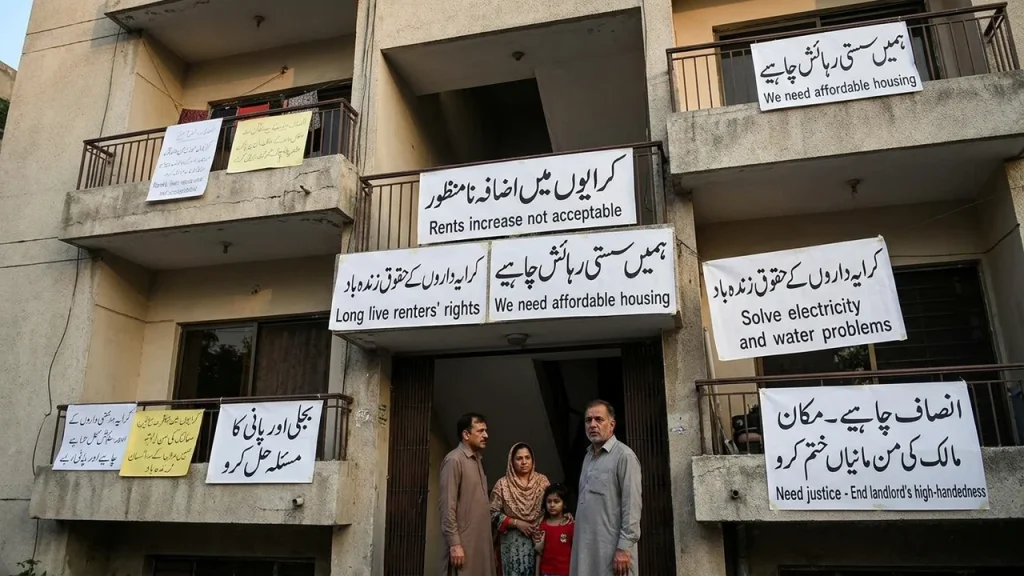
The rental market in Islamabad has never been a simple one-size-fits-all situation. Three distinct forces are reshaping it right now, and if you walk into this market without understanding them, you will almost certainly end up overpaying — or stuck in the wrong area entirely.
Cost Inflation in Prime Sectors. Recent housing cost trends tracked by the State Bank of Pakistan suggest sustained upward pressure on residential rents across major urban centres, including Islamabad. Sectors like F-7, F-8, and F-10 have seen rent increases that outpace general inflation, making them financially out of reach for most mid-income families. The same 5-marla house that rented for PKR 55,000–60,000 per month in 2023 is now commonly listed between PKR 75,000–90,000 in those sectors.
IT Sector and Remote Work Migration. The Ministry of IT & Telecom’s push to expand Pakistan’s technology export base has led to a visible clustering of tech professionals in Islamabad. Areas near the Islamabad Software Technology Park and Blue Area offices — especially G-9, G-10, and G-11 — are seeing stronger rental demand from young professionals. This has narrowed the price gap between G-series and F-series sectors in ways that were not common three years ago.
New Supply From Private Developments. CDA-regulated sectors are being complemented — and in some cases undercut on price — by private housing schemes on the city’s periphery. Areas like Bahria Town, DHA Phase 2, and PWD Housing Society are pulling families who want more space for lower rent. This is creating a bifurcated market: central sectors with prestige but high cost, and outer zones with better value but longer commutes.
Best Areas to Rent a House in Islamabad: A Sector-by-Sector Guide
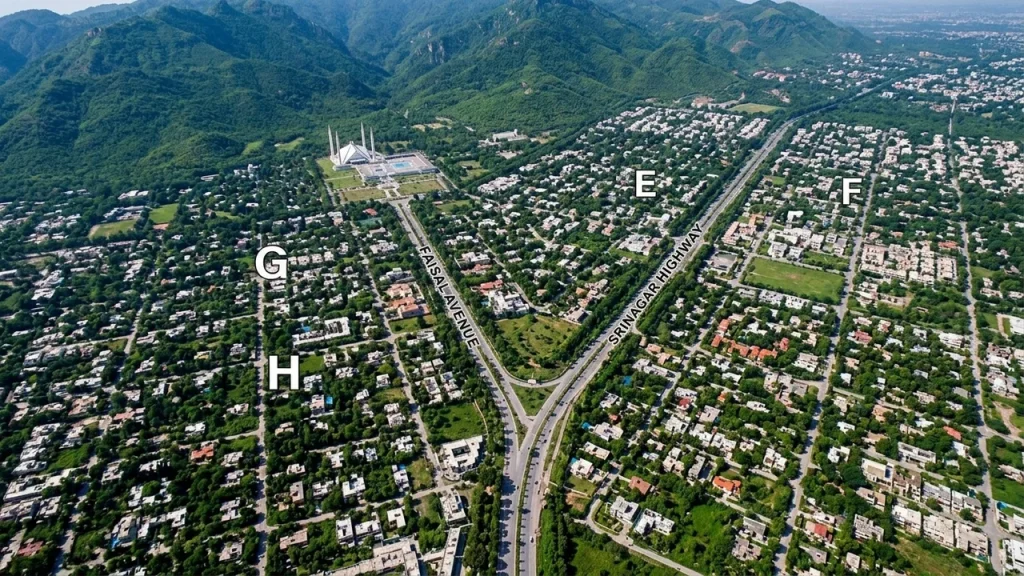
The smart way to approach Islamabad’s rental market is by zone — not by single sector. Each zone has a consistent character, and understanding that character saves you hours of wasted viewings and wasted calls to agents. Below is a practical breakdown of the areas that consistently come up as the best options for renters in 2026.
1. F-Series Sectors (F-6 to F-11) — Prestige With a Price Tag
The F-series sectors are where Islamabad’s most established residential neighbourhoods sit. F-7 and F-8 are the gold standard — wide tree-lined streets, excellent schools, Jinnah Super Market within reach, and a general atmosphere that many families describe as the most liveable in the city.
The downside is cost. A 5-marla house in F-7/3 or F-8/4 will typically rent for PKR 80,000–120,000 per month in 2026, and 10-marla properties go well above that. These are not numbers that work for most Pakistani households on a fixed salary.
F-10 and F-11 offer a more accessible version of this lifestyle. Rents for 5-marla houses in F-10 generally fall between PKR 60,000–80,000 per month, while F-11 can come in slightly lower at PKR 55,000–75,000 for comparable properties. These sectors also have good connection toward the GT Road side of the city, which matters a lot for people commuting into Rawalpindi daily.
F-6 is an older sector with a mix of well-maintained bungalows and aging properties — rents vary wildly depending on the sub-sector and the landlord. Get multiple comparisons before agreeing to anything in F-6 specifically.
Important: Always verify that the property in an F-sector is CDA-approved and has a valid completion certificate before signing any rental agreement.
The F-series is ideal for senior government officials, corporate executives, and families with school-going children who need proximity to Islamabad’s top private schools. The commute to Blue Area or G-series offices is typically 10–20 minutes without heavy traffic.
2. G-Series Sectors (G-6 to G-15) — The Practical Middle Ground
If the F-series is Islamabad’s premium address, the G-series is where most working professionals actually live. And honestly, for the majority of renters, a well-chosen G-sector makes far more financial sense than stretching a budget thin for an F-sector postal code.
G-9 and G-10 are arguably the most convenient sectors in Islamabad for daily commuters. Karachi Company market in G-9 is one of the most accessible commercial hubs in the city — groceries, restaurants, pharmacies, and hardware shops are all within walking distance. A 5-marla house in G-9 rents for roughly PKR 45,000–65,000 per month, depending on condition and sub-sector. G-10 runs slightly higher at PKR 50,000–70,000 for similar size.
G-11 has emerged as one of the best-value areas in this range. It sits close to the Kashmir Highway, giving easy access to both Islamabad and Rawalpindi. Rents for 5-marla houses generally fall between PKR 40,000–60,000 — and the sector has a lively community feel with strong market access.
|Rent a House in Islamabad 2026| I have seen many renters from outside Islamabad underestimate how different G-13 and G-14 feel compared to G-9 or G-10. They are further from the main city grid and infrastructure is still developing in parts — but for budget-conscious families, rents of PKR 30,000–50,000 for a 5-marla house can be a genuine advantage if the commute works.
Here is a quick breakdown of the G-series options worth knowing:
- G-9 and G-10: Most practical for daily commuters. Strong market access, central location, moderate rent.
- G-11: Best value in the mid-G range. Close to Kashmir Highway and Rawalpindi link roads.
- G-13 and G-14: Budget-friendly, still developing. Good for families prioritising space over proximity.
- G-15: On the city’s edge — lowest rents in the G-series but limited amenities nearby.
For most government servants, teachers, and private sector employees in the PKR 60,000–100,000 monthly income bracket, a G-series sector will typically give the best balance of livability and rent. That is a practical reality most agents will not tell you upfront.
3. I-Series Sectors (I-8 to I-16) — Budget-Friendly With Growing Demand
The I-series sectors do not get the attention they deserve, particularly I-8 and I-10. These are some of the most commercially active areas in Islamabad, and the rent-to-value ratio is genuinely good for anyone watching their monthly outgoings carefully.
A 5-marla house in I-8 rents for PKR 40,000–55,000 in 2026 — meaningfully less than equivalent G-series properties, and with access to a very active local market. I-8 Markaz is one of the busiest commercial strips in the city, with everything from furniture shops to medical clinics concentrated in a walkable area.
I-10 and I-11 are solid choices for families who want a more residential feel with lower rents. I-10/4 in particular has a well-established community and reasonable infrastructure. The sector connects easily to the Islamabad Expressway, which matters for people working in Rawalpindi or travelling frequently toward Lahore.
I-14 and I-16 are newer, still-developing sectors where rents are noticeably lower — PKR 25,000–40,000 for basic 5-marla houses is realistic. Infrastructure is more patchy here, and basic utilities like gas connections are not uniform across the sector. This varies quite a bit area to area, honestly.
Important: CDA records indicate that several plots in I-14 and I-16 are still in transition regarding regularisation. Verify the property status with the CDA directly before signing any long lease.
Most property dealers won’t mention regularisation issues unless you ask them directly — this catches first-time renters off guard more often than it should.
4. Bahria Town Islamabad and DHA Phase 2 — Private Schemes With Distinct Value
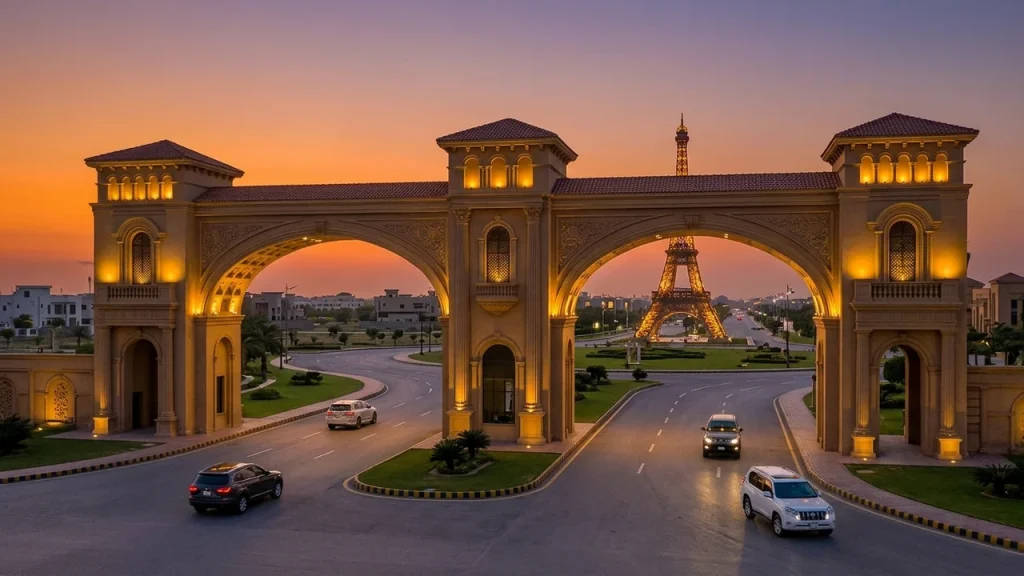
If CDA sectors feel too congested or overpriced for the space you need, Bahria Town Islamabad and DHA Phase 2 Extension are worth serious consideration. Both are private housing schemes operating under their own management — neither falls under direct CDA regulation, which means quality control and community standards are set internally rather than by a government authority.
Bahria Town Islamabad is well known for its security environment, cleanliness, and reliable utilities — 24-hour security, consistent electricity through private supply arrangements, and maintained roads that actually get repaired. Rents for a 5-marla house in Bahria Town Phase 1–7 range from PKR 45,000–75,000 per month. The larger Phase 8 and Overseas Enclave areas go higher depending on size and furnishing level.
DHA Phase 2 is newer and generally quieter than Bahria. The sector is still filling in terms of commercial infrastructure — you will find fewer markets and restaurants compared to Bahria or the CDA G-series. But housing quality is high, and for families who prioritise a quieter, more spacious residential environment, it is a compelling option at PKR 50,000–80,000 for a 5-marla home.
One practical reality that renters often discover too late: Bahria Town and DHA have their own maintenance charges and community fees on top of monthly rent. Always factor those into your total monthly cost — they can add PKR 3,000–8,000 per month depending on property size and phase. Always ask for the maintenance fee schedule before finalising any agreement.
5. PWD Housing Society, Soan Garden, and Pakistan Town — The Underrated Affordable Options
Not every renter in Islamabad needs to be in a CDA sector or a major private scheme. Several well-established housing societies on the city’s edge offer comfortable family living at significantly lower rents — and they are consistently overlooked because they do not show up in the same conversations as Bahria or DHA.
PWD Housing Society sits just off the Islamabad Expressway and is popular with government employees and middle-income families. A 5-marla house here rents for PKR 28,000–45,000 per month, with 10-marla properties ranging from PKR 45,000–65,000. Soan Garden is adjacent and offers similar rent levels — both areas have developed bazars, schools, and mosques that serve the community well.
Pakistan Town is another underrated option. It has a long-established community, mature trees, and a settled older-neighbourhood feel that many renters find genuinely appealing after years in noisier sectors. Rents for a 5-marla house generally run PKR 30,000–50,000 depending on the sub-sector and condition.
If you are considering any of these outer societies, check the NOC status and society registration with the Islamabad administration before committing. Our guide on how to verify a housing society’s NOC status before renting in Islamabad walks through that process step by step.
6. E-7 — The Diplomatic and High-Income Bracket
E-7 is one of Islamabad’s most exclusive residential sectors — it borders the diplomatic enclave and houses senior government officials, foreign diplomats, and high-net-worth residents. Rents are correspondingly high: a 5-marla house is rarely available below PKR 120,000 per month, and 10-marla and 1-kanal properties regularly command PKR 180,000–350,000 and beyond.
This is not a realistic range for most Pakistani renters. But if you are an overseas Pakistani returning home on an international salary, or a foreign national working with an embassy or international organisation, E-7 is worth knowing about. The security, infrastructure, and overall environment are the best Islamabad offers at any price point.
This is something experienced renters know but rarely share: in E-7 specifically, many properties are never publicly listed — they circulate through agent networks and word of mouth. If you are serious about this sector, work with a registered, established real estate agent who has direct contacts there rather than relying on online portals.
Practical Renting Tips for Islamabad in 2026
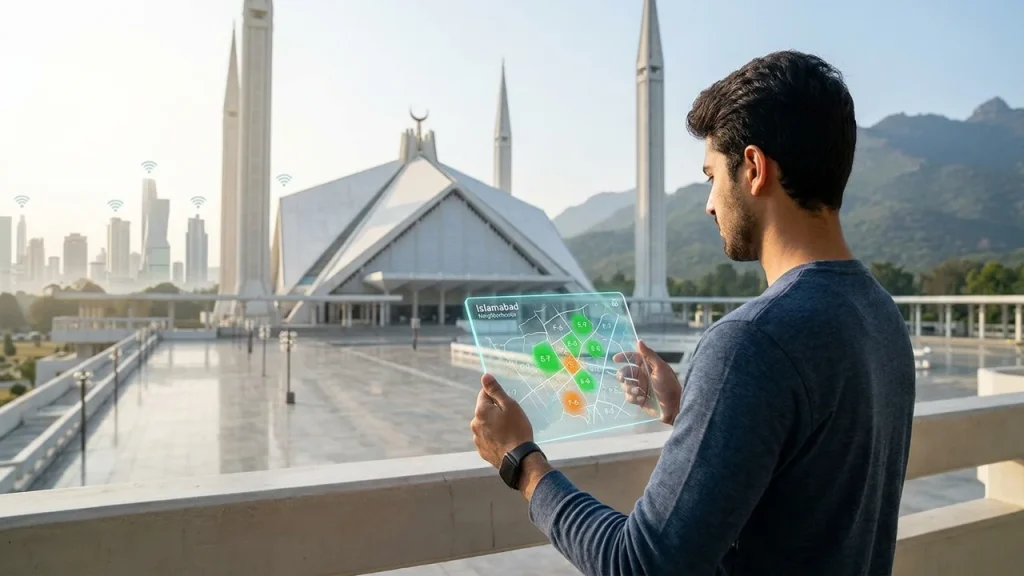
Knowing the best areas to rent a house in Islamabad is only half the equation. The other half is navigating the actual process without making the mistakes that cost renters money — and stress — every single year.
Verify ownership before anything else. Ask to see the original property documents — specifically the allotment letter or title deed registered with the CDA or the relevant housing authority. A photocopy is not enough. Landlords who hesitate to show original documents are a red flag. If a landlord won’t show originals — walk away.
Get a written rental agreement. Islamabad does not have a dedicated rent control court the way Lahore does under Punjab’s Rented Premises Act, which means your written agreement is your primary legal protection. It should clearly state the monthly rent, advance amount, notice period, maintenance responsibilities, and any annual increase clause. Honestly, skipping the written agreement is the single biggest mistake Pakistani renters make — and it is entirely avoidable.
Negotiate from market comparables. Check 3–4 similar listings in the same sub-sector on property portals before your first visit. Walk in knowing the realistic range, and negotiate from actual market data — not from the asking price. Most landlords in G-series and I-series sectors expect negotiation. In F-series sectors there is less flexibility, but 5–10 percent movement is still common if you are paying a longer advance.
Understand advance terms. Two to three months’ advance is standard in Islamabad for unfurnished properties. Some landlords in Bahria Town and DHA ask for six months upfront, especially for furnished units. In most cases, landlords ask verbally first — always get the advance terms in writing before handing over any money. FBR also requires rental income to be declared, so a properly documented agreement actually benefits both parties.
Check utilities independently. Confirm WASA water supply status, gas connection availability, and the IESCO electricity meter reading for the property. Ask to see the last two electricity and gas bills before signing anything. Properties in developing sectors like I-14 or G-15 sometimes have irregular utility connections that only become obvious after you have already moved in.
A lot of first-time renters skip the utility check entirely — and regret it later. That extra twenty minutes of verification before signing saves months of frustration.
Quick Rent Comparison: Best Areas to Rent a House in Islamabad (2026)
| Area / Sector | 5-Marla Rent (PKR/month) | Best Suited For | Status |
|---|---|---|---|
| F-7 / F-8 | PKR 80,000–120,000 | Executives, senior officials | CDA |
| F-10 / F-11 | PKR 55,000–80,000 | Professionals, families | CDA |
| G-9 / G-10 | PKR 45,000–70,000 | Commuters, IT workers | CDA |
| G-11 | PKR 40,000–60,000 | Mid-income families | CDA |
| G-13 / G-14 | PKR 30,000–50,000 | Budget families | CDA |
| I-8 / I-10 | PKR 38,000–55,000 | Budget, good market access | CDA |
| Bahria Town | PKR 45,000–75,000 | Security-focused families | Private |
| DHA Phase 2 | PKR 50,000–80,000 | Spacious living, expats | Private |
| PWD / Soan Garden | PKR 28,000–45,000 | Low-mid income families | Society |
| E-7 | PKR 120,000+ | Diplomats, returning expats | CDA |
Frequently Asked Questions
Which is the cheapest area to rent a house in Islamabad in 2026?
The most affordable options in 2026 are sectors G-13, G-14, G-15, and I-14 — where 5-marla house rents typically start from PKR 25,000–40,000 per month. PWD Housing Society and Soan Garden are also consistently below PKR 45,000 for similar-sized properties. If you are willing to be slightly further from the city centre, these areas offer the best rent-to-space ratio in Islamabad right now. Most people don’t realise this until they have already overpaid for a more central sector for a year.
Is it safe to rent in Bahria Town Islamabad without CDA verification?
Bahria Town operates under its own management and is not under CDA jurisdiction, so CDA verification does not apply here directly. What matters instead is verifying the property through Bahria Town’s own records department — ask for the allotment letter issued by Bahria Town and confirm there are no outstanding dues or mortgage encumbrances. Since FBR has increasingly focused on property documentation as part of its real estate tracking system, having a registered rental agreement is strongly advisable even in private schemes. In practice, this step gets skipped far more than it should.
What is the average house rent in Islamabad for a 10-marla property?
For a 10-marla house in 2026, you are looking at a wide range depending on the sector. In premium F-series sectors like F-7 or F-8, rents for 10-marla properties run PKR 150,000–250,000 per month or higher. In mid-range sectors like G-10 or G-11, expect PKR 90,000–130,000. Budget sectors like I-8 or G-14 offer 10-marla homes from PKR 60,000–85,000. Bahria Town and DHA Phase 2 sit in between at roughly PKR 100,000–180,000 depending on phase and furnishing. Cost trends tracked by the State Bank of Pakistan indicate residential rents have risen steadily across all urban centres over the past 24 months, and Islamabad is no exception.
Do I need a rental agreement registered with any authority in Islamabad?
Islamabad does not have a dedicated rent control court the way Lahore does under Punjab tenancy law, but a written rental agreement is still your most important legal protection as a tenant. For tax purposes, FBR expects landlords to declare rental income — meaning a documented agreement protects you in any potential dispute and gives both parties a clean paper trail. Some tenants get their agreement attested through a local notary for added formality. If a landlord refuses to sign a written agreement — that is a serious warning sign and reason enough to walk away. This situation is actually more common in certain sectors than landlords care to admit.
Which area in Islamabad is best for renting a house near schools and markets?
For families with school-age children, F-10, F-11, G-10, and G-11 consistently come up as the strongest options. These sectors sit close to several top private schools, including Beaconhouse and The City School campuses, as well as established markets like F-10 Markaz and Karachi Company. Bahria Town Islamabad also has internal schools and a large commercial zone, making it largely self-contained for families. The best area for renting in Islamabad really depends on which school your children attend — shortlist areas within a 10-minute drive from the school first, then check what rent levels look like in that radius.
Making the Right Rental Decision in Islamabad
The sector you choose in Islamabad does not just determine your monthly rent — it shapes your commute time, your children’s school options, your weekend lifestyle, and your overall financial health for however long you live there. That is a decision worth spending real time on, not just ten minutes scrolling a property portal at midnight.
The honest picture in 2026 is this: F-series sectors offer the most established lifestyle but at prices that have stretched beyond most household budgets. G-series sectors — particularly G-9, G-10, and G-11 — remain the practical sweet spot for the majority of Islamabad’s working population. The I-series and outer societies like PWD and Soan Garden offer genuine value that most renters overlook. And private schemes like Bahria Town are worth considering if security and infrastructure consistency matter more to you than a CDA postal address. The Capital Development Authority’s sector framework, the State Bank of Pakistan’s broader economic picture, and FBR’s evolving documentation requirements all play into what makes a rental decision financially sound rather than just convenient.
Whatever area you choose, do not skip the basics: verify the documents, get the agreement in writing, check the utilities, and negotiate from real market data. Islamabad’s rental market rewards informed renters and is consistently unkind to those who rush the process. For more help navigating this, explore these guides:
For more reading, explore: – How to Verify a Housing Society’s NOC Before Renting in Islamabad – CDA Sector Zoning Explained: What Pakistani Renters Need to Know – Rental Agreement Checklist for Pakistan: What to Include and What to Watch For
⚠️ Disclaimer: This article is for general informational purposes only and does not constitute legal, financial, or investment advice. Rental prices, CDA regulations, and market conditions in Pakistan change regularly. Always consult a qualified professional and verify with relevant government authorities before making any major decision.
About the Author
Farhan Khan is a WordPress developer and content strategist based in Pakistan. He writes practical, research-based guides on real estate, freelancing, technology, and online income — with a focus on helping Pakistani readers make smarter financial decisions. His work draws on official sources and direct market experience.