
How to Find Affordable Rental Homes in 2026 (Beginner Guide)
This guide draws on official Pakistani authority data, publicly available sources, and real-world market experience. For informational purposes only.
Find Affordable Rental Homes — Most people searching for an affordable rental in Pakistan spend weeks looking at the wrong properties, in the wrong areas, through the wrong channels — and still end up paying more than they should. It’s not because cheap rentals don’t exist. They exist in every major city. The problem is that most beginners don’t know how the rental market actually works from the inside.
Rental hunting in Pakistan is not like browsing an e-commerce site where the price is fixed and the product is clearly described. It’s a negotiation-heavy, relationship-driven, offline-heavy process where the best deals almost never appear on any app or website. The unit that goes for PKR 18,000 per month in a perfectly decent Lahore colony while its neighbors pay PKR 28,000 for something similar — that unit was found by someone who knew what to look for and where.
This guide is for anyone starting from zero. Whether you’re a fresh graduate moving to Karachi for your first job, a family relocating from a smaller city to Islamabad, or an overseas Pakistani looking to arrange housing before returning — the steps here will save you real money and real frustration.
Before you start any search, it’s worth understanding what you’re actually getting into, which is why our breakdown of Rent vs buy in Pakistan 2026 — which option makes more financial sense is worth reading first if you haven’t already made up your mind.
What’s Actually Going on in Pakistan’s Rental Market Right Now
Rental prices across Pakistani cities have climbed sharply over the past three years, and 2026 hasn’t brought much relief for tenants. But the reasons behind this are more specific than most people realize — and understanding them helps you find the gaps where affordability still exists.
According to the State Bank of Pakistan, inflation in the housing and utilities segment has consistently outpaced general consumer price inflation. This means rental costs have risen faster than most household incomes, squeezing tenants who aren’t being strategic about where and how they search.
Three things are driving the current situation:
Urban migration hasn’t slowed down. Lahore, Karachi, and Islamabad continue absorbing hundreds of thousands of new residents every year. Fresh graduates, job-seekers, and families chasing better schools and hospitals all need housing — and that steady demand keeps vacancy rates low in desirable areas. A landlord with a decent unit in a functioning colony doesn’t need to wait long for a tenant, which removes most of the urgency to offer competitive rates.
New affordable supply is going to buyers, not renters. The Lahore Development Authority and similar bodies across provinces have approved housing project after housing project over the past five years — but almost all of it targets property buyers through installment schemes. Purpose-built affordable rental housing barely exists in Pakistan. The best cheap rentals are almost always in older, established residential areas, not new societies.
The informal rental market is still dominant. A large share of available rental units never appear on OLX or Zameen. They’re filled through word of mouth, handwritten gate signs, and local dealer networks. Renters who only search digitally are seeing maybe 30–40% of what’s actually available in any given area — and usually the more expensive 30–40% at that.
Step 1 — Get Your Real Budget Right Before You Search a Single Listing
Here’s something nobody tells first-time renters clearly enough: your monthly rent figure and your actual monthly housing cost are two very different numbers.
Say you find a place for PKR 22,000 per month. Sounds manageable. But before you move in, you’ll pay a security deposit of two to three months’ rent — that’s PKR 44,000 to PKR 66,000 upfront, before you’ve spent a single rupee on moving or setup. Add one month’s rent as agent commission if you used a property dealer. Add PKR 5,000–15,000 for minor repairs, new locks, or basic touch-ups that most budget rentals need. Your “first month” ends up costing PKR 80,000–100,000 for a unit whose monthly rent you thought was PKR 22,000.
This isn’t a scam — it’s just how the Pakistani rental market works. The problem is that beginners don’t factor it in, run out of cash midway through the move, and end up in a weaker negotiating position because they’re desperate.
The practical rule: Take the maximum monthly rent you think you can afford and subtract 20% from it. That’s your actual search budget. Keep the 20% in reserve for everything around the rent itself. So if your budget is PKR 30,000/month, search for units priced at PKR 22,000–24,000 and negotiate from there.
Also think honestly about utilities. In Lahore, a LESCO summer electricity bill on a unit with one AC running normally can easily cross PKR 10,000–12,000 per month. In Karachi, K-Electric bills can be brutal on upper floors with poor ventilation. These aren’t extras — they’re fixed monthly costs that belong in your housing budget calculation alongside rent.
Step 2 — Stop Searching in the Wrong Areas
This is the most expensive mistake budget renters make. They target a prestigious address — DHA, Bahria Town, F-7 Islamabad, Clifton — spend weeks finding nothing affordable, get demoralized, and either overpay or give up and settle for something they hate.
Every major Pakistani city has what I’d call “value shadow” areas — neighborhoods sitting just outside the premium zones that offer most of the practical benefits at a fraction of the price. These aren’t rough areas. They’re established, functioning residential colonies with proper roads, working utilities, and actual communities living there. They just don’t have the prestige tag.
In Lahore, areas like Allama Iqbal Town, Gulshan-e-Ravi, Johar Town’s B and C blocks, and the older streets of Garden Town consistently offer 2-bedroom units for PKR 20,000–35,000 per month. The same unit size in DHA Phase 5 or Gulberg starts at PKR 70,000 and goes up quickly. The commute difference for someone working in central Lahore is often 10–15 minutes.
In Karachi, North Nazimabad, Gulistan-e-Johar, Scheme 33, and Federal B Area are where working families and young professionals actually live affordably. Rents in these areas run 40–60% lower than Clifton or DHA without meaningfully different day-to-day infrastructure in most parts.
In Islamabad, the G-sectors carry government-area prices. But Rawalpindi’s Satellite Town, PWD Housing Society, and areas along the Peshawar Road bring you within 25–30 minutes of most Islamabad employment zones at dramatically lower rental costs.
The question to ask about any area isn’t “is this address impressive?” It’s: Is electricity supply consistent? Can I get there and back to work without losing two hours a day? Is there a market within walking distance? Those answers matter infinitely more than a famous colony name on your address.
For a street-level breakdown of affordable neighborhoods in each major city, our guide on cheap rental areas in Pakistan 2026 — city by city breakdown goes deeper on specific blocks and price ranges of Affordable Rental Homes.
Step 3 — Use Every Search Channel, Not Just the Obvious Ones
Most beginners open OLX, scroll for an hour, get discouraged by the prices, and assume that’s the whole market. It isn’t. Not even close.
Digital platforms like OLX and Zameen are useful — but they show you the listings where landlords either paid to advertise or specifically wanted online visibility. A meaningful portion of available units, especially in the affordable range, never go online at all. They’re filled before they need to be.
Walk the target area yourself. This sounds old-fashioned. It works. In most Pakistani cities, landlords still put handwritten “Kiraye par dena hai” signs on their gates, sometimes with a phone number, sometimes not. These units are invisible to anyone searching from a screen. Spend a Sunday morning walking the streets of the area you want — two to three hours will surface options you’d never find online.
Facebook groups are underrated. Search “[City name] makan kiraye par 2026” or “[Area name] rental home” in Facebook groups. Many landlords post here directly without involving any agent, which means no commission. The listings are often more current than OLX too, since Facebook posts get interaction and stay visible through engagement.
Talk to local shopkeepers. The chai wala, the general store owner, the pharmacy guy — they know every building on their street and they know whose tenant just moved out or who’s thinking of renting their upper portion. This sounds casual but it’s genuinely one of the most effective rental search tools in Pakistan. I’ve seen people find excellent units this way that never appeared anywhere else.
Use 2–3 local property dealers in parallel, not one big agency. Small area-specific dealers know every landlord on every street in their zone. Their knowledge is hyper-local in a way that no app can replicate. Yes, they charge commission — but if they find you a unit PKR 5,000/month cheaper than what you’d find yourself, that commission pays for itself inside six months.
Step 4 — Inspect Properly — Budget Units Hide Problems Well
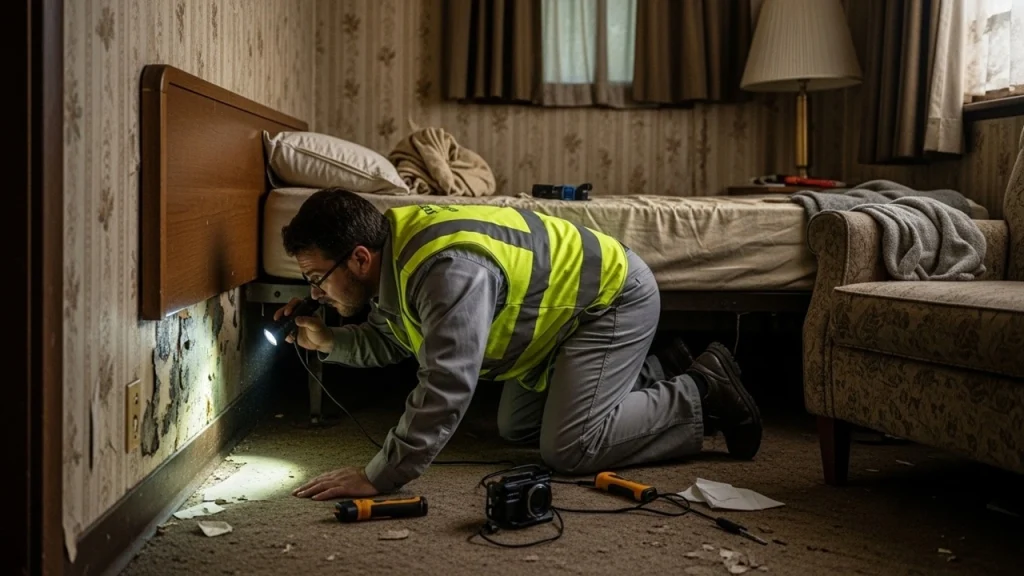
Affordable Rental Homes often have issues that aren’t obvious on a quick walk-through. The landlord isn’t necessarily hiding them — sometimes they’ve just lived with a leaking roof so long they’ve stopped noticing it. Your job is to find everything before you sign anything.
Visit every shortlisted property twice: once in the morning and once in the late afternoon or evening. The character of a street changes completely between those times, and you want to know what you’re actually moving into.
During inspection, check these specifically:
- Water pressure: Run every tap when you’re trying to find affordable rental homes.. Check the kitchen, both bathrooms if there are two, and the toilet flush. Weak pressure in a ground-floor unit often means the overhead tank isn’t working properly or the supply line has issues.
- Electricity load: Ask to see the meter and confirm the sanctioned load. A low-load connection can’t run an AC and a refrigerator simultaneously — and in summer, that’s not a minor inconvenience.
- Load-shedding reality: Ask the neighbors, not the landlord. A landlord in Lahore’s Ravi Road area once told me his area gets maximum two hours load-shedding daily. The neighbor said eight hours. Those are very different living conditions.
- Walls and ceiling: Press gently on any wall that looks slightly discolored or uneven. Soft spots near bathroom walls almost always mean ongoing damp. A ceiling with repainted patches usually means a recurring leak. These problems don’t go away — they come back every monsoon.
Honestly, if a landlord rushes you during inspection or gets defensive when you look closely at something, take that as useful information. A landlord proud of their property lets you look as long as you need.
Step 5 — Negotiate — Every Pakistani Landlord Expects You To
A lot of first-time renters, especially younger ones, feel uncomfortable negotiating. They worry it seems rude or that the landlord will move on to the next applicant. This misunderstands how Pakistani rentals work entirely.
Almost every landlord in Pakistan lists their property 10–20% above what they’ll actually accept. It’s standard practice. Not negotiating is leaving your own money on the table, month after month.
The key is to negotiate from facts, not just from wanting a lower price. Before any conversation, check 5–6 comparable listings on OLX and Zameen in the same area. Know what similar units are actually renting for after negotiation — not the listed price, the settled price. When you sit down with a landlord, you’re not guessing. You’re quoting the market back at them.
Point out what you noticed during inspection. “The back bedroom needs fresh paint.” “There’s no gas meter — we’ll need cylinders.” “The kitchen taps have low pressure.” Each of these is a legitimate, specific reason to ask for a lower price — not a complaint, just a fact about the unit’s current condition.
Then offer something valuable in return. Landlords in Pakistan value reliable, low-drama tenants above almost anything else. Offer 3–6 months’ rent in advance. Offer a longer lease term — two years instead of one. These things matter to a landlord far more than squeezing an extra PKR 2,000 per month from you. A good negotiation on a PKR 30,000 listing can realistically land you at PKR 24,000–25,000 — saving you PKR 60,000–72,000 over a year.
Step 6 — Always Get a Written Rental Agreement
Skipping the written rental agreement is, without question, the single biggest mistake Pakistani renters make. A verbal deal with a landlord — even a friendly, trustworthy-seeming one — gives you no protection when something goes wrong. And something always eventually goes wrong.
A proper written agreement needs to cover:
- Full names and CNIC numbers of both tenant and landlord
- The complete property address
- Monthly rent amount in both digits and words
- Security deposit amount and the exact conditions under which it can be withheld
- Lease duration with clear start and end dates
- Notice period required from both sides
- Whether and by how much rent can increase during the agreed lease term
- Which utility bills the tenant pays versus the landlord
Get it signed by both parties. Get two witnesses if possible. Keep the original in a safe place — not just a phone photo.
Pakistan’s Rent Restriction Ordinance, which exists in various forms across provinces, does offer tenants legal protections against arbitrary eviction and mid-lease rent increases. But those protections are nearly impossible to enforce without documented proof of the tenancy. Without a written agreement, you’re entirely at your landlord’s discretion — and discretion can change when personal circumstances or rental market conditions shift.

Step 7 — Keep Your Monthly Costs Low After You Move In
Finding a cheap rental is only half the job. Keeping your total monthly housing cost genuinely manageable requires ongoing attention once you’re settled.
The biggest variable cost in most Pakistani households isn’t rent — it’s electricity. WAPDA and distribution company billing structures in Pakistan mean that consumption above certain monthly units gets charged at significantly higher rates. Crossing from the lower slab to the higher slab mid-summer can double your electricity bill from one month to the next. Running appliances during off-peak hours, switching to LED lighting throughout, and being deliberate about air conditioner usage — these aren’t just tips, they’re decisions that easily save PKR 3,000–6,000 per month.
Build a decent relationship with your landlord from the start. Pay on time. Communicate about problems in writing via WhatsApp — not to be formal but to have a record. Report minor maintenance issues quickly rather than letting them grow into bigger problems. Landlords who trust their tenants are dramatically less likely to push hard for rent increases at renewal time, and far more likely to return security deposits cleanly.
When renewal comes — and it comes every year in most Pakistani tenancies — don’t accept the first number your landlord names. Do the same market research you did when you first rented. Know what comparable units are actually going for. A tenant who’s been reliable, paid on time, and maintained the property well has genuine leverage at renewal. Use it.
Our guide on how to reduce household expenses in Pakistan on a monthly budget covers the wider picture of managing living costs beyond rent — worth reading if you’re trying to maximize how far your income goes.
Frequently Asked Questions
Q: What is a realistic monthly rent for a 2-bedroom unit in a mid-range Lahore area in 2026?
In areas like Johar Town, Allama Iqbal Town, or Gulshan-e-Ravi, a reasonably maintained 2-bedroom unit typically rents for PKR 25,000–40,000 per month depending on floor level, condition, and whether utilities are included. Ground-floor portions in older buildings tend to be at the lower end; upper-floor independent flats in newer construction sit at the higher end. These figures assume normal negotiation — landlords in these areas rarely stick to their listed price, so factor in a 10–15% reduction from whatever you see advertised.
Q: How much security deposit is standard in Pakistan, and can I negotiate it?
Two to three months’ rent is the norm across most Pakistani cities. On a PKR 28,000/month unit, that’s PKR 56,000–84,000 upfront — which is genuinely significant for most first-time renters. You can negotiate the deposit, particularly if you offer a longer lease term or advance rent payment in exchange. Some landlords in older colonies accept just one month, especially for long-term tenants they trust. Always document the deposit amount in writing and specify the conditions for its return — without that, recovering your deposit at move-out becomes unnecessarily complicated.
Q: Is it legal for a landlord to raise my rent before my lease ends?
Generally no — a landlord cannot increase rent during an active, agreed lease term if the original amount is documented in a written agreement. Pakistan’s Rent Restriction Ordinance, applied at the provincial level, provides some protection against arbitrary mid-lease increases. The problem is that enforcement requires documented evidence of the original agreement. If you have only a verbal deal or a basic receipt, your legal standing is weak. This is exactly why a proper written rental contract matters so much — it’s your most practical protection against this specific situation.
Q: Should I use a property dealer or search on my own to find cheap rentals?
Both work — the question is how you use them. Searching independently through OLX, Facebook groups, and direct area walks costs you nothing in commission and often surfaces better-priced units. A local property dealer saves you time and has connections to off-market listings, but charges one month’s rent. The smartest approach is to search independently for two to three weeks first. If you haven’t found something suitable by then, bring in one or two local dealers in your target area — not a big agency, but small operators who know the specific streets you’re looking at. That way you only pay commission when it actually saves you time or finds you something you couldn’t find yourself.
Q: What should I do if my landlord refuses to return my security deposit when I move out?
Start by documenting the property’s condition at move-out — photograph every room and every wall before handing over the keys, and timestamp the photos. Send a written WhatsApp message or formal letter requesting the deposit return with a specific deadline. If the landlord still refuses without providing a legitimate written reason, you can approach the Rent Controller under your province’s Rent Restriction Ordinance — it’s a formal process but more accessible than most people realize, and it doesn’t necessarily require hiring a lawyer. Having your original rental agreement, deposit receipt, and move-out photos gives you a solid case.
The Renters Who Find the Best Deals Do One Thing Differently
There’s a pattern to who consistently finds good affordable housing in Pakistan and who ends up overpaying, frustrated, or stuck somewhere they hate. It’s not income. It’s not connections. It’s preparation.
The renters who do well start with an honest budget — one that includes the deposit, the commission, and the first month’s setup costs, not just the monthly rent figure. They search in the right areas, not the famous ones. They use every channel available, not just OLX. They inspect carefully, negotiate from facts, and never — ever — move in without a signed written agreement.
Bodies like the State Bank of Pakistan track housing cost trends, and the Rent Restriction Ordinance across provinces exists specifically to protect tenants — but only tenants who know these protections exist and take the steps to be covered by them. Most renters in Pakistan don’t. That’s where the real gap is.
You now have what you need to search smarter, negotiate better, and protect yourself once you find the right place. The affordable rental that fits your budget and your life is out there in 2026 — in almost every Pakistani city. Go find it with a clear head and a realistic plan.
For more reading, explore: – Rent vs Buy in Pakistan 2026 — What Actually Makes Financial Sense? – Cheap Rental Areas in Pakistan 2026 — City by City Breakdown – How to Reduce Household Expenses in Pakistan on a Monthly Budget
[META DESCRIPTION]: Learn how to find affordable rental homes in Pakistan in 2026 — budgeting, best areas, negotiation tips, and tenant rights explained step by step. 157 characters.