
Best Rental House Tips in Pakistan for Renters (2026)
Introduction
Rental house tips in Pakistan Renting your first house in Pakistan sounds straightforward until you’re three weeks into the search, you’ve visited twelve properties, paid one token amount you may never see again, and you’re still not sure whether the unit you liked is even legally available to rent.First-time renters across Pakistan — whether in Lahore, Karachi, Islamabad, or Multan — walk into the rental market at a real disadvantage. Not because affordable housing doesn’t exist. It does. But the market runs on unwritten rules, local knowledge, and informal relationships that nobody formally explains to you. Prices are almost never fixed. Documents are regularly skipped. And the deals that look cleanest on OLX are sometimes the ones with the most problems underneath.
The good news is that preparation closes most of that gap. First-time renters who go in knowing what to check, what to ask, and what to refuse consistently find better houses at better prices than those who search on instinct alone. These rental house tips in Pakistan aren’t pulled from theory — they come from how the market actually operates, neighborhood by neighborhood, in 2026.
If you’re still weighing whether renting even makes sense for your situation right now, our detailed guide on rent vs buy in Pakistan 2026 — which option makes more financial sense is worth reading before you commit to a search.
What First-Time Renters in Pakistan Are Actually Facing Right Now
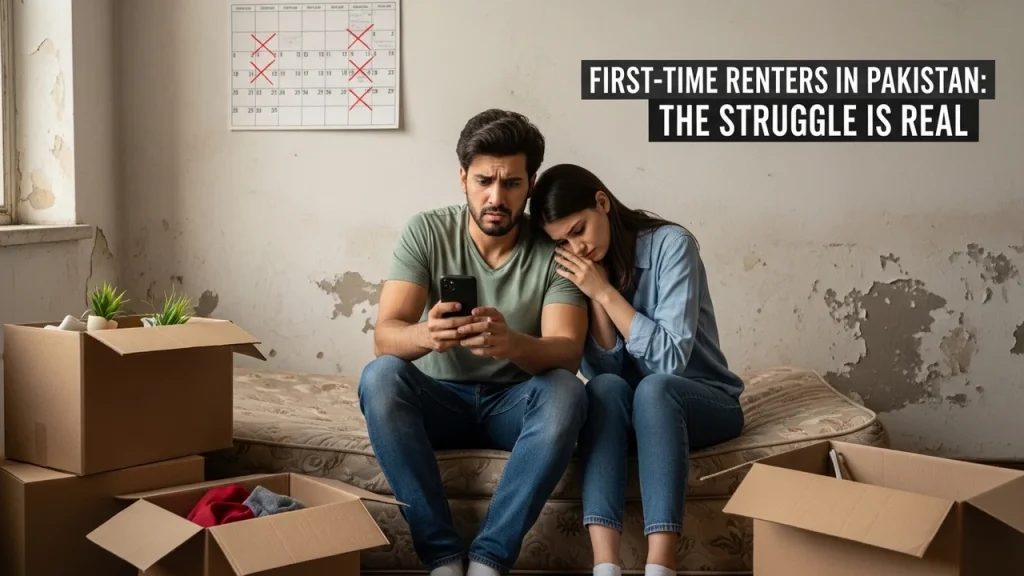
Pakistan’s rental market has become meaningfully harder for new entrants over the past three years. Understanding why helps you search smarter rather than just searching harder.
Recent cost trends tracked by the State Bank of Pakistan suggest that housing and utility expenses in urban centers have risen faster than household incomes in the same period. This general upward pressure means first-time renters in 2026 are entering a market with less financial margin for error than existed even three years ago — which makes getting these decisions right more consequential.
Three specific realities shape what new renters face:
Good units disappear before they’re advertised. A meaningful share of decent, fairly priced rental houses in Pakistani cities are filled through word of mouth, neighborhood dealer networks, and existing tenant referrals before they ever reach OLX or Zameen. What stays visible online for weeks is often there because it’s overpriced or has issues that local renters already know about. I’ve seen this pattern repeat in Lahore, Rawalpindi, and Faisalabad consistently — the best units rarely need to be advertised widely.
Landlords have power — but not unlimited power. Demand consistently outpaces supply in desirable areas, which gives landlords genuine leverage. But landlords also deeply value stable, low-drama tenants who pay on time and don’t cause problems. A first-time renter who presents themselves confidently and demonstrates financial reliability has more room to negotiate than they typically realize.
Documentation is optional until something goes wrong. Pakistani rental culture is largely informal. Most tenancies run without proper written agreements — until a dispute arises, at which point the party without paperwork almost always loses. Insisting on a written agreement isn’t being difficult. It’s being sensible.
Calculate Your Real Budget Before Searching Anything | Rental House Tips in Pakistan
Rental House Tips in Pakistan most common financial shock for first-time renters in Pakistan isn’t the monthly rent itself. It’s everything surrounding it that nobody mentioned upfront.
Say you find a house for PKR 25,000 per month. Before moving in, the landlord asks for a security deposit — two to three months’ rent is standard, meaning PKR 50,000 to PKR 75,000 upfront in cash. If a property dealer helped you find it, add one month’s commission: another PKR 25,000. Then factor in minor repairs, new locks, and basic setup costs — typically PKR 8,000 to PKR 15,000 in most budget units. Your PKR 25,000 per month rental has cost PKR 90,000 to PKR 120,000 before you’ve spent a single night there.
This is normal. It’s not a trick. It’s just how renting in Pakistan works — and first-time renters who don’t plan for it end up stretched or negotiating from desperation.
Important: Take your comfortable monthly rent limit and subtract 20% from it. That’s your actual search budget. Keep the 20% in reserve for the surrounding costs.
Utilities belong in the calculation too. A LESCO electricity bill in Lahore during summer, with one AC running regularly, can cross PKR 10,000 to PKR 14,000 per month. In Karachi, K-Electric billing on upper-floor units without proper ventilation runs higher than most new renters expect. Gas, water, and any building maintenance charges add further.
A lot of first-time renters only realize this after their first month — by which point they’re already committed. Plan for it before you search, not after.
Tip 2 — Choose the Right Area Based on Your Life, Not the Address| Rental House Tips in Pakistan

Rental House Tips in Pakistan| First-time renters almost universally make the same area selection mistake. They target the address that sounds impressive rather than the neighborhood that actually fits their daily life.
DHA, Bahria Town, Gulberg, Clifton, F-6 Islamabad — these are real places with real quality. They’re also where practical renting tips in Pakistan consistently point away from for budget-conscious first-timers, because the price premium far exceeds the functional benefit for most renters.
Every major Pakistani city has residential areas that deliver most of the day-to-day functionality of premium neighborhoods at 40 to 60 percent of the rental cost. In Lahore, Johar Town’s B and C blocks, Allama Iqbal Town, Gulshan-e-Ravi, and the older streets of Garden Town consistently offer proper roads, working utilities, and real community infrastructure at prices well below the famous colony names. A decent 2-bedroom unit in Johar Town B-Block rents for PKR 25,000 to PKR 38,000 per month. The same unit size in DHA Phase 5 starts at PKR 70,000 and climbs from there.
In Karachi, North Nazimabad, Gulistan-e-Johar, Scheme 33, and Federal B Area are where working families and young professionals actually live on realistic incomes. In Rawalpindi, areas like Satellite Town and PWD Housing Society put you within 25 to 30 minutes of most Islamabad employment centers at dramatically lower monthly costs.
The four questions that actually matter about any area:
A yes to all four matters far more than a prestigious address. This varies area to area more than most people expect — which is exactly why walking the neighborhood at different times of day matters before committing.
Tip 3 — Use Every Search Channel Simultaneously (Rental House Tips in Pakistan)
Most first-time renters open OLX, scroll for an hour, and assume that represents the full Pakistan house rent advice available to them. It doesn’t.
Online platforms show you properties where landlords specifically wanted digital visibility — often because they couldn’t fill the unit through their existing network. A meaningful portion of genuinely good, fairly priced rental houses never appear on any app at all.
Walk your target area on a weekend morning. Landlords in Pakistani cities still regularly put handwritten “Kiraye par dena hai” signs on gates — sometimes with a phone number, sometimes just a knockable door. Two to three hours of walking specific streets surfaces units that no online searcher knows about. Most dealers won’t tell you this openly, but walking is genuinely one of the most effective rental search tools available.
Check Facebook groups actively. Search “[City name] makan kiraye par 2026” or “[Area name] rental home” in Facebook Marketplace and local community groups. Many landlords post here directly without any dealer, meaning no commission from either side. Listings here are often more current than formal platforms.
Talk to local shopkeepers. The general store owner, the corner pharmacy, the chai stall that’s been on the same street for years — these people know when a neighbor’s tenant is leaving, which portions are becoming available, and which landlords deal fairly. I’ve seen renters find excellent units this way that never appeared anywhere online.
Engage two or three local dealers in parallel — not one big agency. Small, area-specific dealers know every landlord on every street in their zone. Use them as one channel alongside the others. Pay commission only if they find something you couldn’t locate independently within a reasonable timeframe.
For a street-level breakdown of the best areas in each major city, our guide on cheap rental neighborhoods in Lahore, Karachi, and Islamabad 2026 goes deeper on specific blocks and realistic price ranges.
Inspect Every Property Properly and Visit Twice (Rental House Tips in Pakistan)
Budget rental houses in Pakistan frequently hide problems that aren’t obvious on a quick walkthrough. An experienced landlord knows exactly which issues to downplay and which corners to stand you in front of. Your job is to be more thorough than they expect.
Visit every serious option twice — once in the morning and once in the late afternoon. Streets in Pakistani cities change character completely between those times. A peaceful lane at 10am might sit next to a noisy workshop or busy wholesale market by 5pm.
During each visit, check these specifically:
- Every tap and water pressure. Weak pressure in a ground-floor unit usually signals a non-functional overhead tank or a shared supply line being drawn on by too many connections.
- The electricity meter and sanctioned load. A low-load meter can’t run an AC and refrigerator simultaneously — in a Pakistani summer, that’s a serious daily problem, not a minor inconvenience.
- Actual load-shedding hours from neighbors, not the landlord. Ask the family across the street. A landlord’s estimate of load-shedding is almost always optimistic. In many cases, landlords give you the weekend figure, not the weekday reality.
- Walls near bathrooms for dampness. Press gently on any slightly discolored wall near bathroom connections. Soft or powdery spots mean ongoing moisture that returns every monsoon without fail.
- The ceiling of top-floor units. Patched or repainted ceiling sections almost always indicate a recurring leak.
Important: If a landlord becomes defensive or rushes you during inspection — that reaction itself is useful information. A landlord proud of their property lets you look as long as you need.
Tip 5 — Negotiate From Market Facts, Not Just Hope

One of the most practical renting tips in Pakistan that first-time renters consistently underuse: every landlord lists their property with negotiation room built in. Not negotiating means paying more than necessary every single month for the entire tenancy.
The key is negotiating from facts rather than from a general desire for a lower price. Before any conversation with a landlord, spend 30 minutes checking five to six comparable listings in the same area on OLX and Zameen. Know what similar units are actually settling for after negotiation — not listed price, the price deals are actually closing at.
Use specific inspection observations as legitimate negotiation points. “The kitchen paint is peeling.” “There’s no gas meter — we’ll need cylinders.” “The water pressure in the back bathroom is weak.” These aren’t complaints — they’re documented conditions of the property that justify a price adjustment.
Offer something valuable in return. Landlords across Pakistan prioritize reliable, stable tenants over marginally higher monthly rents. Offering three to six months’ rent in advance, or committing to a two-year lease instead of one year, often moves a landlord to reduce the monthly rate meaningfully. A well-handled negotiation on a PKR 28,000 listed unit can realistically close at PKR 22,000 to PKR 24,000 — saving PKR 48,000 to PKR 72,000 over a single year.
Honestly, the best advice here is simple: negotiate from what comparable units are actually renting for in that specific area, not from the number written on the listing.
Tip 6 — Always Insist on a Written Rental Agreement

Skipping the written rental agreement is the single biggest mistake first-time renters in Pakistan make. Everything feels fine until it doesn’t — and when it doesn’t, the party without documentation almost always loses.
A proper written rental agreement must cover:
Get it signed. Two witnesses if possible. Keep the original safe — not just a phone photo.
Pakistan’s Rent Restriction Ordinance, which operates in varying forms across provinces, gives tenants legal protection against arbitrary eviction and mid-lease rent increases. But these protections are nearly impossible to enforce without written proof of the original agreement. The Rent Controller offices across provinces handle formal disputes — but only when there’s documented evidence to work from.
In many cases, landlords ask verbally for conditions they’d never put in writing. If a landlord genuinely resists a written agreement — that tells you something important about how they intend to run the tenancy. Take it seriously.
Tip 7 — Build a Decent Landlord Relationship From the Start
This sounds simple. Its practical impact on your rental experience is bigger than most first-time renters expect.
Pakistani landlords who trust their tenants behave very differently from those who don’t. They fix things promptly when something breaks. They don’t push hard for rent increases at renewal. They return security deposits cleanly at move-out without manufacturing reasons to withhold them. The difference between a good landlord relationship and a difficult one is measurable in both money and daily stress — and it starts from the first interaction.
Pay on time. Every month. If you’re going to be even a few days late, message the landlord in advance — not after they’ve already asked. Report maintenance issues in writing via WhatsApp so there’s a record of when you flagged something and what was agreed. Fix small things yourself at low cost where you can, rather than letting minor issues become expensive disputes at move-out.
When lease renewal comes — and it arrives faster than first-time renters expect — don’t passively accept whatever number your landlord opens with. Do fresh market research first. Know what comparable units are actually renting for. A tenant who has paid reliably and maintained the property well has genuine leverage at renewal. Use it.
Our guide on how to manage monthly household expenses in Pakistan on a tight budget covers the broader picture of keeping total living costs manageable well beyond just the monthly rent.
Frequently Asked Questions
Q: What is a realistic monthly rent for a first-time renter in Lahore in 2026?
In mid-range areas like Johar Town, Allama Iqbal Town, or Gulshan-e-Ravi, a decent 2-bedroom unit typically rents for PKR 25,000 to PKR 42,000 per month after negotiation. Ground-floor portions in older buildings sit at the lower end; upper-floor independent units in newer construction run higher. In premium areas like DHA or Gulberg, similar sizes start at PKR 70,000. These are post-negotiation ranges — listed prices almost always run 10 to 15 percent above what actually settles. Most people don’t realize how much room there is to negotiate until they try it for the first time.
Q: How much security deposit is normal in Pakistan, and can I get it back?
Two to three months’ rent is the standard across most Pakistani cities. On a PKR 28,000 per month rental, that’s PKR 56,000 to PKR 84,000 upfront — a significant amount for first-time renters to have ready. You can negotiate the deposit, particularly if you offer a longer lease term or some advance rent in exchange. The key to getting it back cleanly is documentation — photograph the property at both move-in and move-out, and make sure the deposit amount and exact return conditions are clearly written in your rental agreement. In practice, this varies a lot depending on the landlord and the area, so get everything in writing from the start.
Q: Can a landlord raise my rent before my lease ends?
Generally no — a landlord cannot increase rent during an active lease term when the original amount is documented in a written agreement. Pakistan’s Rent Restriction Ordinance, applied provincially, provides tenants with protection against arbitrary mid-lease increases. The practical problem is enforcement: without a written contract specifying your monthly rent and lease term, proving what was originally agreed becomes extremely difficult. This is actually more common than landlords admit — verbal agreements get “reinterpreted” when market rents rise. A signed written agreement is your most practical protection against this specific situation.
Q: Is using a property dealer worth the commission for first-time renters?
It depends on how you use them. Searching independently through OLX, Facebook groups, and walking target areas costs nothing in commission and often finds better-priced units — but takes more time. A local area-specific dealer saves time and has connections to off-market properties, but charges one month’s rent. The smartest first-time renter approach is to search independently for two to three weeks first, then engage one or two local dealers if nothing suitable has appeared. This way you only pay commission when it actually delivers something your independent search couldn’t find.
Q: What should I do if my landlord refuses to return my security deposit?
Start by documenting the property’s condition at move-out thoroughly — photograph every room and fixture before handing over the keys, and timestamp everything. Send a written WhatsApp request for deposit return with a specific deadline so there’s a paper trail. If the landlord refuses without providing a legitimate written reason, you can approach the Rent Controller under your province’s Rent Restriction Ordinance. It’s a more accessible process than most people realize, and doesn’t necessarily require hiring a lawyer. Having your original rental agreement, deposit receipt, and move-out photographs makes your case significantly stronger — which is exactly why you collect all of that from day one.
What Separates a Smooth First Rental From a Stressful One
The pattern between first-time renters who find good situations and those who end up in expensive, difficult tenancies is consistent. It’s not income, connections, or luck — it’s preparation and knowing which steps actually matter before any money changes hands.
Renters who do well start with an honest budget that includes deposits and setup costs, not just the monthly rent figure. They search in areas that fit their actual life rather than their aspirations. They use every available channel at once. They inspect carefully, negotiate from market facts, and insist on a written agreement even when it feels unnecessary in the moment. These aren’t complicated steps — they just require the discipline to follow through on each one before committing, not after.
Recent housing cost trends tracked by the State Bank of Pakistan show that urban rental prices continue to outpace income growth in most major cities. The Rent Restriction Ordinance and Rent Controller offices across provinces exist specifically to support tenants — but only those with documentation to work from. Most first-time renters in Pakistan don’t know these protections exist until they need them. That knowledge gap is exactly where the difference between a good rental experience and a painful one begins.
The right rental house is genuinely out there in 2026 — in Lahore, Karachi, Islamabad, Rawalpindi, and Faisalabad. Go find it with a clear plan, a realistic budget, and a pen ready to sign a proper agreement.
For more reading, explore: – Rent vs Buy in Pakistan 2026 — Which Option Makes More Financial Sense? – Cheap Rental Neighborhoods in Lahore, Karachi, and Islamabad 2026 – How to Manage Monthly Household Expenses in Pakistan on a Tight Budget
⚠️ Disclaimer: This article is for general informational purposes only and does not constitute legal, financial, or investment advice. Rental laws, deposit norms, and market rates in Pakistan vary by province and change regularly. Always consult a qualified professional and verify with relevant government authorities before making any major housing decision.
About the Author
Farhan Khan is a WordPress developer and content strategist based in Pakistan. He writes practical, research-based guides on real estate, freelancing, technology, and online income — with a focus on helping Pakistani readers make smarter financial decisions. His work draws on official sources and direct market experience.